
Google Chrome 155.0.8059.39
Google Chrome remains the world's most popular browser with over 73% desktop market share, offering record-breaking speed improvements (30% faster on Mac since 2024), the largest extension ecosystem, and deep Gemini AI integration for search, summarization, and in-browser chat. Chrome 150+ includes Enhanced Safe Browsing with on-device AI scam detection, Ask-Before-HTTP protection, and ongoing Rust-based memory safety improvements. However, it's RAM-hungry, Google's data collection is a privacy concern, and the AI features can be intrusive. Edge offers comparable performance with Copilot integration, Firefox provides better privacy controls, and Safari excels on Apple hardware, but Chrome's combination of speed, extensions, and cross-platform sync keeps it the default choice for most users.
- Free
- Windows
- macOS
- Linux
- Android
- iOS
- Nov 6, 2026
a62b277dc03da2cff50cc04589deb66f6875be339c066d46adb49b49eedb629dVirusTotal report ↗Screenshots
About Google Chrome
Google Chrome Download, Fast, Secure Web Browser
TL;DR Quick Take / Who is this for?
Google Chrome is the world's most-used web browser, holding roughly 66% of the global market and around 73% of the desktop market as of late 2026[reference:0][reference:1]. It is fast, compatible with virtually every website, and backed by the largest extension ecosystem of any browser. The current stable release is version 150.0.7871.47, and the browser is free on Windows, macOS, Linux, Android, and iOS[reference:2]. Chrome's strengths are clear: it consistently ranks among the fastest browsers in benchmarks, it syncs bookmarks, passwords, and history across devices through your Google account, and its security features, sandboxing, Safe Browsing, and AI-powered scam detection, make it a safe place to browse[reference:3]. The trade-offs are equally well documented. Chrome is the most memory-hungry major browser, it offers no ad or tracker blocking by default, and everything you do in the browser is recorded by Google and can be linked to your account[reference:4][reference:5]. Chrome is the right pick for users who want maximum compatibility, the broadest extension selection, and seamless integration with Google services. It is not the best choice for users whose primary concern is privacy or for anyone running a low-RAM machine who wants a lean browsing experience.
Quick Info Box
| License Type | Freeware (no ads, no subscription) |
|---|---|
| File Size | Approx. 163 MB (Windows offline installer); installed footprint larger |
| OS Compatibility | Windows 10/11 (64-bit), macOS, Linux, Android, iOS |
| Latest Version | 150.0.7871.47 (Stable) |
| Developer | Google LLC |
Key Features & Real-World Usability
Chrome's feature set is built around speed, compatibility, and Google integration. The browser runs on the Chromium engine, which means it renders pages the same way as Edge, Brave, and other Chromium-based browsers, and web developers optimise for it because it is the most-used engine by a wide margin[reference:6]. In a 2026 Speedometer 3.1 benchmark round, Chrome scored 42.7, ahead of Safari at 41.9, Edge at 40.8, and Firefox at 35.7, though the gap is small enough that most users will not feel a difference in everyday browsing[reference:7]. Extension support is Chrome's other major advantage. The Chrome Web Store offers the largest selection of extensions of any browser, covering everything from ad blockers and password managers to developer tools and productivity add-ons. Chrome also includes a set of built-in utilities that reduce the need for third-party extensions: Memory Saver suspends inactive tabs to free up RAM, with Google claiming up to 40% less memory usage, and Energy Saver reduces background activity when the battery is low. Both are enabled by default[reference:8]. Sync is another pillar. Signing into Chrome with a Google account keeps bookmarks, passwords, browsing history, open tabs, extensions, and settings in sync across every device, which is genuinely convenient for anyone who moves between a desktop and a phone[reference:9]. Security features include sandboxing, Safe Browsing warnings for malicious sites and phishing, and AI-powered scam detection that can flag suspicious pages before you interact with them[reference:10]. The limitations are consistent with the browser's design priorities. Chrome offers no built-in ad blocking or tracker blocking by default, and while it began limiting third-party cookies in 2024, that transition remains partial in 2026 and has been contested[reference:11]. The browser also has no protection against fingerprinting, and its memory consumption is the highest among major browsers, which is why Google added Memory Saver in the first place[reference:12][reference:13].
- Fast, compatible rendering: Chrome leads or ties the top spot in 2026 browser benchmarks and is the engine web developers optimise for first, so complex web apps and JavaScript-heavy sites run smoothly[reference:14].
- Largest extension ecosystem: The Chrome Web Store offers more extensions than any competing browser, covering ad blocking, productivity, development, accessibility, and nearly every other use case[reference:15].
- Memory Saver and Energy Saver: Built-in tools suspend inactive tabs and reduce background activity when the battery is low, with Google claiming up to 40% less memory usage from Memory Saver alone[reference:16].
- Seamless Google account sync: Bookmarks, passwords, history, open tabs, extensions, and settings sync across desktop and mobile when you sign in with a Google account[reference:17].
- Strong security baseline: Sandboxing, Safe Browsing, and AI-powered scam detection make Chrome generally safe against malicious websites and phishing attempts[reference:18].
- Automatic background updates: Chrome updates silently, and the menu icon changes colour to indicate when a restart is needed to apply a security update[reference:19].
- Cross-platform availability: Native apps for Windows, macOS, Linux, Android, and iOS, with a consistent experience across all of them.
Pros, Cons & Community/User Feedback
User sentiment around Chrome is broadly positive on usability and compatibility, and consistently critical on privacy and resource consumption. On Capterra, Chrome holds a 4.8 average from 2,115 reviews, with ease of use rated 4.8 and customer service 4.4[reference:20]. Reviewers describe it as "a fast, reliable, and user-friendly browser" that serves as a "primary digital hub" through its integration with Google services, and the learning curve is "almost non-existent"[reference:21][reference:22]. TrustRadius reviewers praise the "extensive ecosystem of extensions," "fast and efficient performance," and "robust security measures," while noting that Chrome is "cost-efficient due to being free"[reference:23]. The complaints are equally consistent. Memory consumption is the most common criticism: a Capterra reviewer writes that Chrome "eats too much RAM memory" and freezes the system when many tabs are open, and TrustRadius reviewers cite "high memory and RAM consumption impacting performance" as a top drawback[reference:24][reference:25]. Privacy is the deeper fault line. Independent analysis notes that Chrome "remains the fastest and most compatible option for most people, but it is also the most memory-hungry and the most aggressive about linking your browsing to your Google account"[reference:26]. TechSpot summarises the tension: Chrome is "generally considered safe" against malware and phishing, but "privacy is a different story", everything you do, including every character typed into the address bar, is recorded by Google and can be linked to your account[reference:27]. Incognito mode blocks third-party cookies by default but does not prevent Google from seeing your activity[reference:28]. Some reviewers also note that extension quality is inconsistent and that the Chrome Web Store "isn't always perfectly vetted," which creates risk from malicious or poorly maintained add-ons[reference:29][reference:30]. The practical takeaway is that Chrome's speed, compatibility, and extension library are genuinely best-in-class, while its memory footprint and data collection practices are the areas where users consistently report frustration.
Pros
- Consistently among the fastest browsers in 2026 benchmarks
- Largest extension ecosystem of any browser through the Chrome Web Store
- Seamless sync of bookmarks, passwords, history, and tabs across devices
- Strong security features including sandboxing, Safe Browsing, and AI scam detection
- Memory Saver and Energy Saver built in and enabled by default
- Automatic background updates with clear visual indicators
- Free and available on every major desktop and mobile platform
- 4.8 average rating from over 2,100 Capterra reviews
Cons
- Highest memory consumption among major browsers, especially with many tabs open
- No default ad blocking or tracker blocking; users need extensions for privacy
- No protection against browser fingerprinting
- Browsing activity, including address bar keystrokes, is recorded by Google and linkable to your account
- Incognito mode blocks third-party cookies but does not hide activity from Google
- Third-party cookie restrictions remain partial and contested as of 2026
- Extension quality is inconsistent, and the Web Store is not perfectly vetted
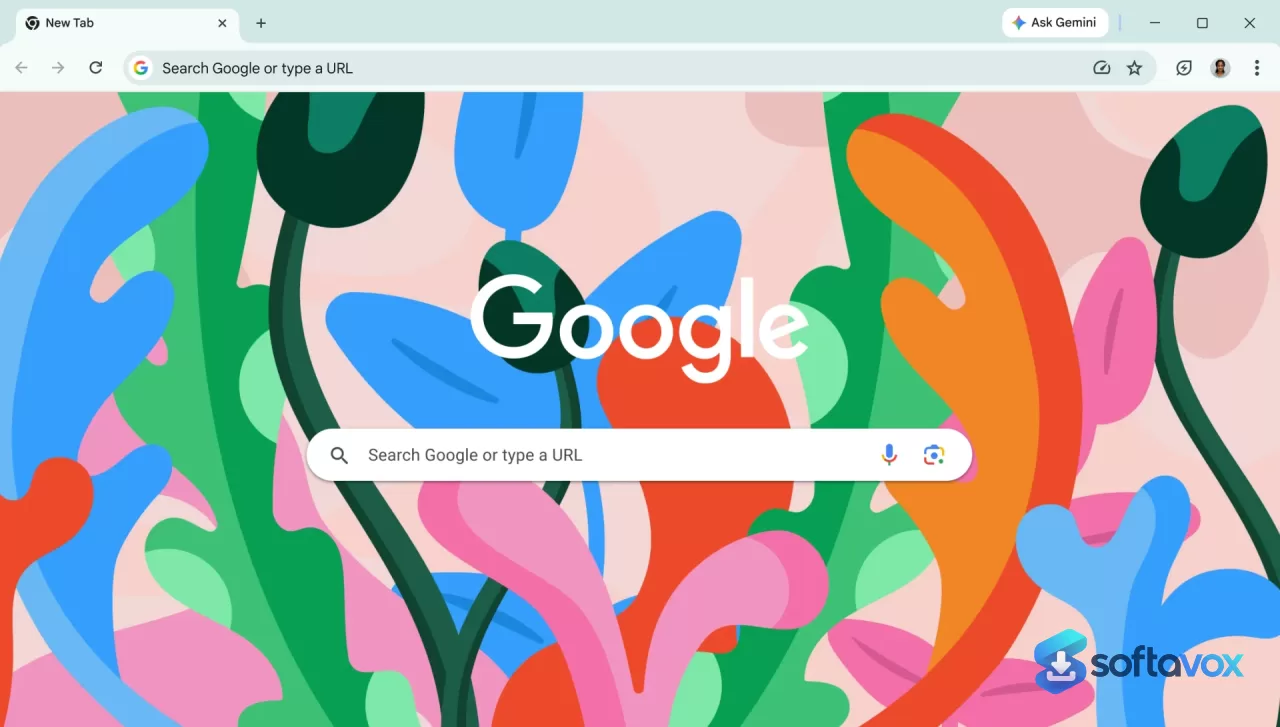
- Interface elements like the bookmarks bar and settings panel feel outdated to some users
Final Verdict & Safe Download Advice
Google Chrome remains the default choice for most people, and the reasons are straightforward: it is fast, it works with every website, and it offers more extensions than any competitor. The sync features are genuinely useful, the security baseline is solid, and the browser is free on every platform. For users who want maximum compatibility and the broadest selection of add-ons, Chrome is still the safest bet. The caveats are equally clear. Chrome is the most memory-hungry major browser, it offers no meaningful privacy protection by default, and Google's data collection is baked into the product rather than being an optional add-on. If you are on a low-RAM machine, if privacy is a priority, or if you want ad and tracker blocking without installing extensions, a Chromium-based alternative like Brave or a non-Chromium option like Firefox is a better fit. If you use Chrome, use it with awareness: enable Memory Saver if you have not already, review your sync settings, install a reputable ad blocker if you want one, and understand that Incognito mode is not a privacy shield against Google itself.
- Download only from google.com/chrome or your platform's official app store: The official Chrome page distributes the desktop installer, and the mobile apps come from Google Play and the Apple App Store. Third-party "Chrome download" sites and modified installers are a common vector for adware and malware.
- Verify the installer size and version: The Windows offline installer is approximately 163 MB, and the current stable version is 150.0.7871.47. A dramatically smaller file or an older version number is a warning sign.
- Check system requirements before installing: Chrome requires Windows 10 or 11 (64-bit), macOS, or a modern Linux distribution. The 32-bit Windows build still exists but is being phased out, and older Windows versions are no longer supported.
- Review sync settings before signing in: Signing into Chrome syncs your history, bookmarks, and passwords to your Google account. If you do not want that, use Chrome without signing in or adjust the sync settings under Settings > You and Google.
- Do not use "Chrome cleaner" or "Chrome optimizer" downloads from third parties: These are almost always unwanted programs or malware. Chrome updates itself automatically, and no third-party tool is needed to keep it current.
- Audit your extensions periodically: Review the extensions installed in Chrome and remove anything you no longer use or do not recognise. The Chrome Web Store is not perfectly vetted, and a malicious extension can access everything you do in the browser.
See all Browsers programs (1) ›
Key features
- Fast page loading and responsive tabs
- Gemini AI features: AI Mode, AI Overviews, Ask Gemini
- Gemini Nano API for extension developers
- Largest extension marketplace (Chrome Web Store)
- Enhanced Safe Browsing with on-device AI scam detection
- Ask-Before-HTTP protection against network tampering
- Rust-based memory safety improvements
- 73.28% desktop market share
- Alternatives: Microsoft Edge, Mozilla Firefox, Safari
Frequently asked questions about Google Chrome
Is Google Chrome free?
Is Google Chrome safe to use?
What is Google Chrome used for?
What operating systems does Google Chrome run on?
Why does Google Chrome use so much memory?
How do I update Google Chrome?
What’s new in Google Chrome 155.0.8059.39
247 Security Vulnerabilities Fixed: This update addresses a total of 247 security vulnerabilities, including 4 Critical and 53 High severity issues.
Critical Vulnerabilities (Use-After-Free): All four critical vulnerabilities are use-after-free issues affecting the following components: Chromecast, Browser, Navigation, and Track.
New Features: This version introduces support for the JPEG XL image format and post-quantum cryptography.
Stability Improvements: General browser performance and stability have been improved.
Versions
| Version | Release date | Platform | File size | |
|---|---|---|---|---|
| Google Chrome 155.0.8059.39 Latest version | Oct 6, 2026 | WindowsmacOSAndroidiOSLinux | 39.5 MB | Download |
Comments about Google Chrome
No comments yet. Share your experience with this program!